
DBT for Teens
Skills for big emotions. Support for a real life.
Meaningful change for teens happens when treatment addresses the patterns underneath emotional suffering, not just the symptoms you see on the surface. Many adolescents who come to DBT feel stuck in cycles that move quickly: intense emotions, impulsive reactions, conflict at home or with peers, avoidance, shutdown, self-harm urges, or repeated crises that leave everyone exhausted.
Dialectical Behavior Therapy for Adolescents (DBT for Teens, often called DBT-A) is a structured, evidence-based treatment designed specifically for teens who experience emotions intensely and need practical support to build stability, safety, and a life that feels worth living.
-
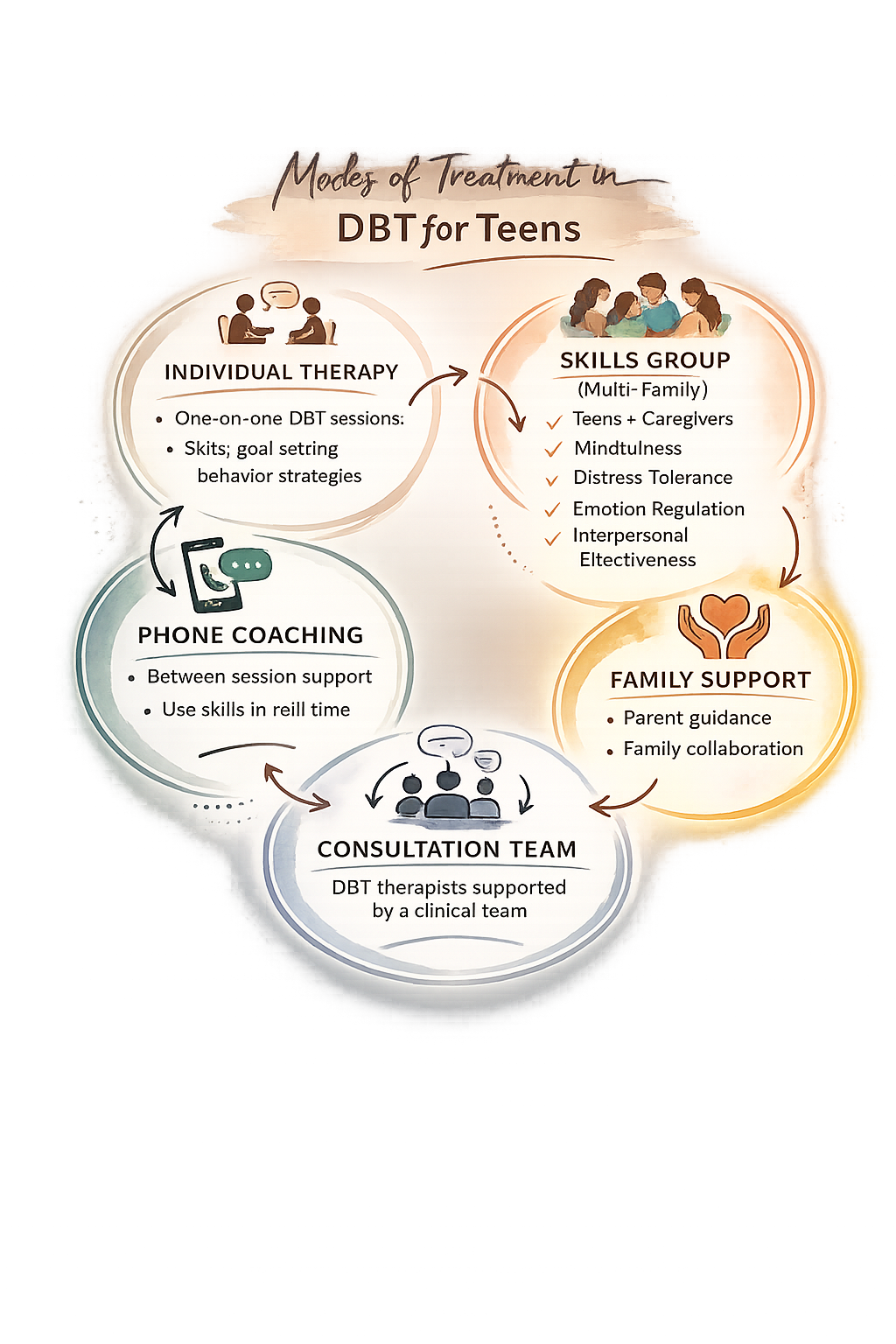
Your teen meets one-on-one with their therapist each week. Together, they work toward your goals, understand patterns that keep them stuck, and learn how to apply DBT skills to real situations.
Individual therapy focuses on reducing harmful behaviors and building a life that aligns with their values.
-
In the multifamily skills class, teens and their caregivers attend skills class together. This group meets weekly and functions like a classroom where families learn and practice DBT skills alongside one another. The group covers the core DBT skill areas: mindfulness, emotion regulation, distress tolerance, and interpersonal effectiveness.
The purpose of the group is to help teens build effective coping skills while also supporting caregivers in learning the same language, tools, and strategies. This creates a shared understanding at home and improves communication, problem solving, and emotional support.
Multifamily skills class helps families move from reacting in crises to responding with clarity and confidence. It strengthens relationships, reduces conflict, and helps everyone work together toward building a life worth living.
-
Between sessions, phone coaching is available during difficult moments. This allows your teen to reach out to their therapist for support in using DBT skills in real time, especially when emotions or urges feel overwhelming. The goal is to help teens use skills when they need them most.
-
Your teen’s therapist participates in a weekly consultation team with other DBT providers. This meeting ensures therapists stay grounded, supported, and aligned with the DBT model. It helps maintain high-quality, compassionate care, so you benefit from the strength of the entire team, not just one clinician.
Program Components

One of the most painful experiences for a parent is seeing their child in distress. You don’t have to do this alone. We are here to support your family with skill and compassion.
-
Individual DBT Therapy
Teens meet one-on-one with their DBT therapist to understand their unique patterns, reduce crisis behaviors, and build motivation for change. Sessions are structured and practical. We use DBT strategies like behavioral chain analysis (figuring out what led up to a blow-up, shutdown, self-harm urge, or impulsive choice), solution analysis (what to do differently next time), and skills coaching to help teens apply tools in the moments they need them most. We also strengthen what is already working by reinforcing effective behavior and helping teens notice progress, even when it is small.DBT Skills Group for Teens and Caregivers (Multi-Family Skills Group)
DBT for adolescents typically includes a multi-family skills group, meaning teens attend alongside a parent or caregiver. This is a core part of DBT-A because it aligns the whole system around the same language and tools. In group, families learn and practice DBT skills in a supportive, structured environment. Skills are taught in modules such as mindfulness, distress tolerance, emotion regulation, and interpersonal effectiveness. The goal is not perfection. The goal is repeated practice, real-life application, and building a shared roadmap at home so parents are not guessing what to do when emotions run high.Between-Session Skills Coaching (Phone Coaching)
DBT includes coaching between sessions so teens and caregivers can get support using skills in real time, not only after a crisis has already passed. This is a key part of what makes DBT different. When a teen is overwhelmed at night, panicking before school, or escalating during conflict, coaching helps translate “I know the skill” into “I can use the skill right now.” Over time, the goal is for the teen to internalize these steps and rely less on coaching as skill use strengthens.Parent and Family Support Integrated into Treatment
Because teens live in a family system, DBT for Teens includes caregiver involvement as part of the treatment model. Caregivers are supported in learning how to validate effectively, set limits when needed, and respond in ways that reduce escalation rather than intensify it. Families learn how to repair after conflict, reduce cycles of blame and shame, and build routines that support stability. We do not view parents as the problem. We view families as essential partners in creating the conditions where change can actually hold.DBT Consultation Team (Clinician Team Support Behind the Scenes)
DBT therapists participate in a weekly DBT consultation team. This is a built-in quality and support structure where clinicians stay aligned with the model, problem-solve stuck points, and maintain fidelity to DBT strategies. For families, this matters because it means treatment is not happening in isolation. Your teen’s clinician is supported by a team that helps maintain consistency, effectiveness, and sustainability in delivering high-quality care.DBT for Teens helps adolescents build skills in four key areas: staying present and noticing what is happening (mindfulness), surviving emotional storms without making things worse (distress tolerance), understanding and changing emotional patterns (emotion regulation), and building healthier relationships while maintaining self-respect (interpersonal effectiveness). Over time, the goal is not to eliminate emotion. The goal is to help teens experience emotions without being controlled by them, make choices that move them toward their values, and build a life that feels more stable, connected, and possible.
If your teen has been stuck in crisis cycles, if your family feels like you are walking on eggshells, or if your teen is working hard but still struggling to cope, DBT offers a clear and compassionate path forward. At EBTC, we provide DBT for Teens with structure, warmth, and clinical rigor, so adolescents and their families can move from surviving to living with more confidence, steadiness, and hope.
-
Getting started is simple. Reach out through our contact form or schedule a call—we’ll walk you through the next steps and answer any questions along the way.
-
DBT is a rigorous treatment program. In order for client’s to get the most out of treatment we require them to pause therapy with outside providers once they commit to the program.