
DBT for Adults
Change is hard AND change is possible.
DBT is designed for people who struggle with intense emotions, self-harm or suicidal thoughts, impulsive behaviors, relationship upheaval, and feeling stuck despite previous therapy. It is also useful for anxiety, depression, binge or restrictive patterns, trauma-related problems, and ADHD-related emotion dysregulation.
DBT combines mindfulness, emotional awareness, and behavior change strategies to support people in reducing patterns that feel overwhelming or self-defeating. In DBT, you learn how to stay grounded in the moment, communicate more clearly, cope with stress in effective ways, and build a life aligned with your values.
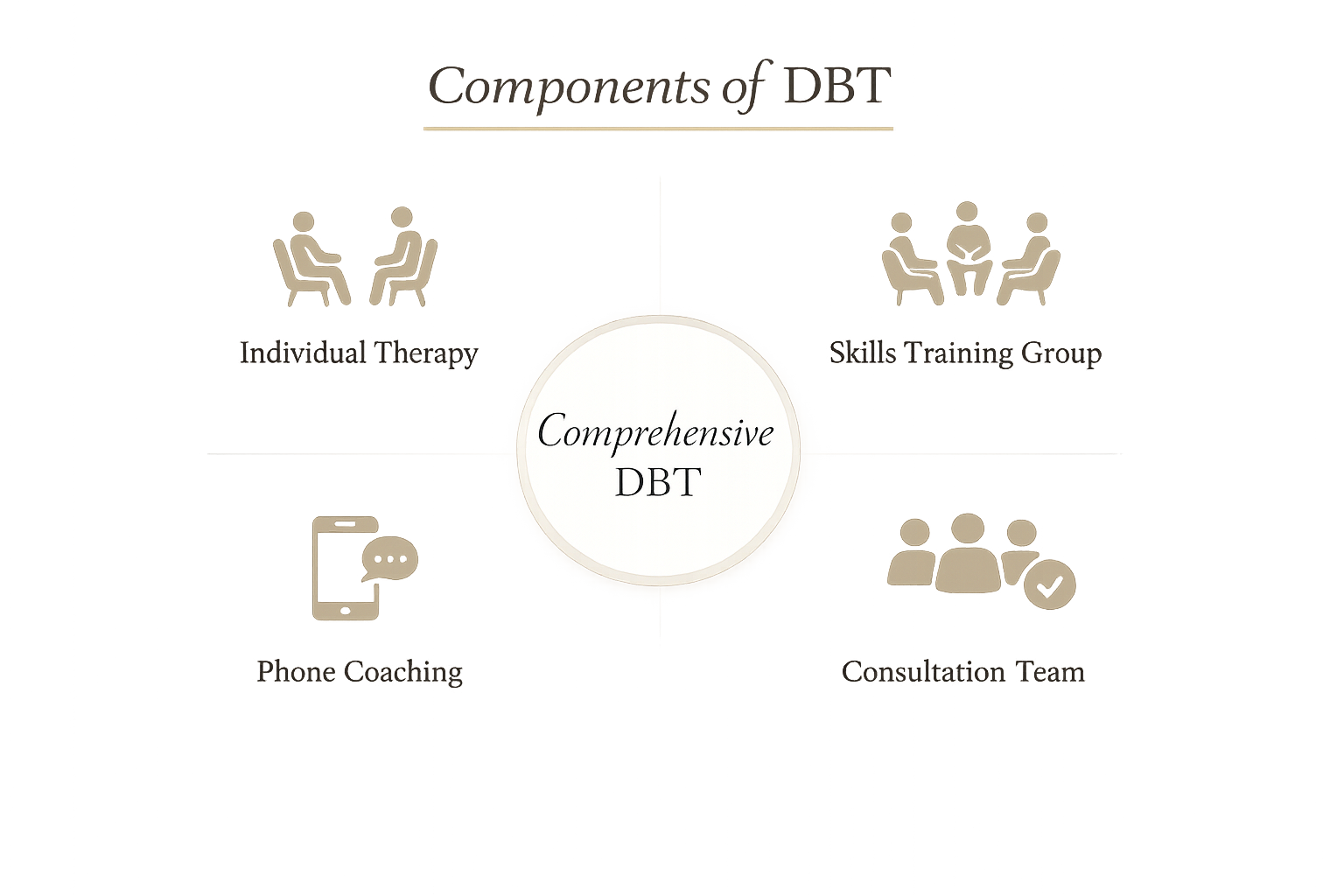
Program Components
-
You meet one-on-one with your therapist each week to work toward your goals, apply DBT skills to real situations, and strengthen your motivation for change.
Comprehensive DBT requires that clients meet with a DBT therapist in the program and pause any work with outside therapists while in treatment.
Individual sessions focus on reducing behaviors that are getting in the way of your life and building new patterns that support your values.
-
Skills group meets weekly and functions like a class. You learn and practice skills in mindfulness, emotion regulation, distress tolerance, and interpersonal effectiveness. The goal is to build a toolkit for managing emotions and improving relationships in daily life.
-
Phone coaching is available between sessions during difficult moments. It gives you real-time support to use DBT skills when you need them most. The purpose is to help you apply what you are learning in therapy to everyday challenges and crisis situations.
-
Your therapist participates in a weekly consultation team with other DBT providers. The team meets to ensure that treatment stays effective, compassionate, and aligned with the DBT model. This support helps your therapist stay grounded, balanced, and skillful so that you receive the highest quality care.
Frequently Asked Questions
-
Comprehensive Dialectical Behavior Therapy (DBT) is a structured, evidence-based treatment designed to help individuals manage intense emotions, reduce harmful behaviors, and build a life that feels more stable and meaningful. It is often recommended for people struggling with emotional dysregulation, self-harm or suicidal thoughts, repeated hospitalizations, or challenges related to diagnoses such as depression, anxiety, PTSD, bipolar disorder, eating disorders, substance use, or Borderline Personality Disorder (BPD).
-
DBT skills group is a structured, educational group that focuses on learning practical skills for managing emotions, coping with stress, and improving relationships. Rather than traditional group therapy, skills group functions more like a class where clients learn and practice skills together in a supportive and collaborative environment. Participants are encouraged to apply skills in daily life and discuss how they are working between sessions.
-
DBT begins with a pre-treatment stage that usually lasts about four weeks. This time is used to learn about the program, ensure a good fit, and establish commitment before starting active DBT therapy. Once you commit to comprehensive DBT, active treatment and skills coaching begin.
-
Comprehensive DBT is a structured treatment that works best when clients are able to commit consistently to the process. Because learning and applying DBT skills takes time and practice, our program requires an initial six-month commitment to support meaningful progress and treatment stability. This timeframe allows clients to fully participate in individual therapy, skills training, and skill use between sessions, which are all essential components of effective DBT.
Every week clients receive:
60 minutes of Individual Therapy
24/7 Phone Coaching
120 minutes of DBT Skills Class
Their individual therapist attends consultation team, where they receive support around providing hte post effective DBT possible.
-
When you commit to comprehensive DBT, you will be asked to pause sessions with your current individual therapist at the end of the pre-treatment stage.
This requirement helps ensure consistency in treatment, reduces confusion that can come from participating in multiple therapy approaches at the same time, and supports the development of a strong, focused therapeutic relationship with your DBT therapist.
We understand that ending with a previous therapist can feel difficult, and we encourage clients to continue working with their current therapist during pre-treatment as they prepare for this transition.
-
Linehan Institute (Official DBT information)
Developed to increase access to DBT and provide education about the treatment created by Dr. Marsha Linehan.
What is DBT & DBT Skills?Behavioral Tech Institute (DBT education & resources)
Training and educational resources focused on understanding DBT and how it works.
Behavioral Tech DBT Knowledge CenterNational Institute of Mental Health (Psychotherapy Overview)
General information about psychotherapy and evidence-based mental health treatment approaches.
Psychotherapies – NIMH